Skip to content

Alta Via 1 in 6 days - the guide

Distance (km)
0
Days on the trail
0
Elevation gain (m)
0

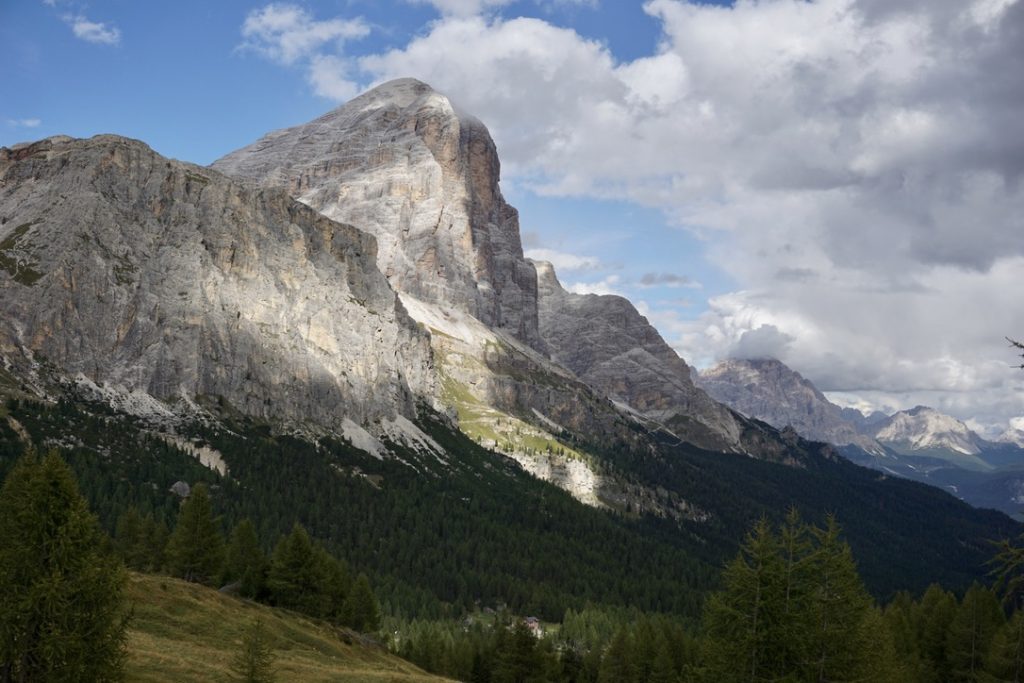
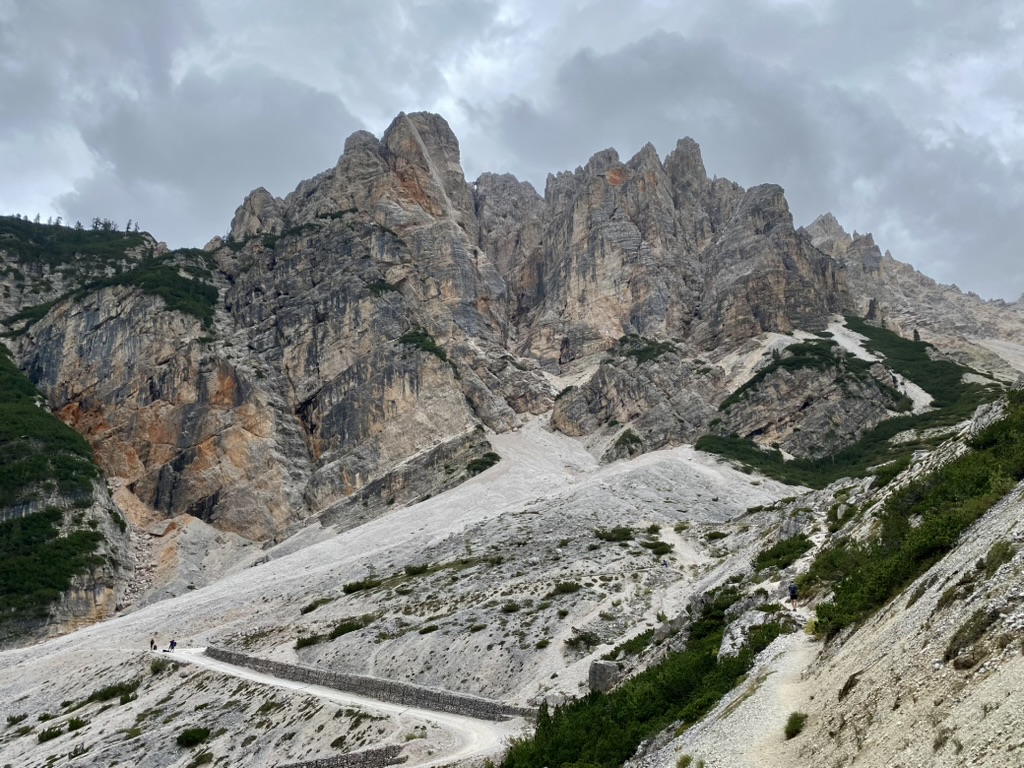
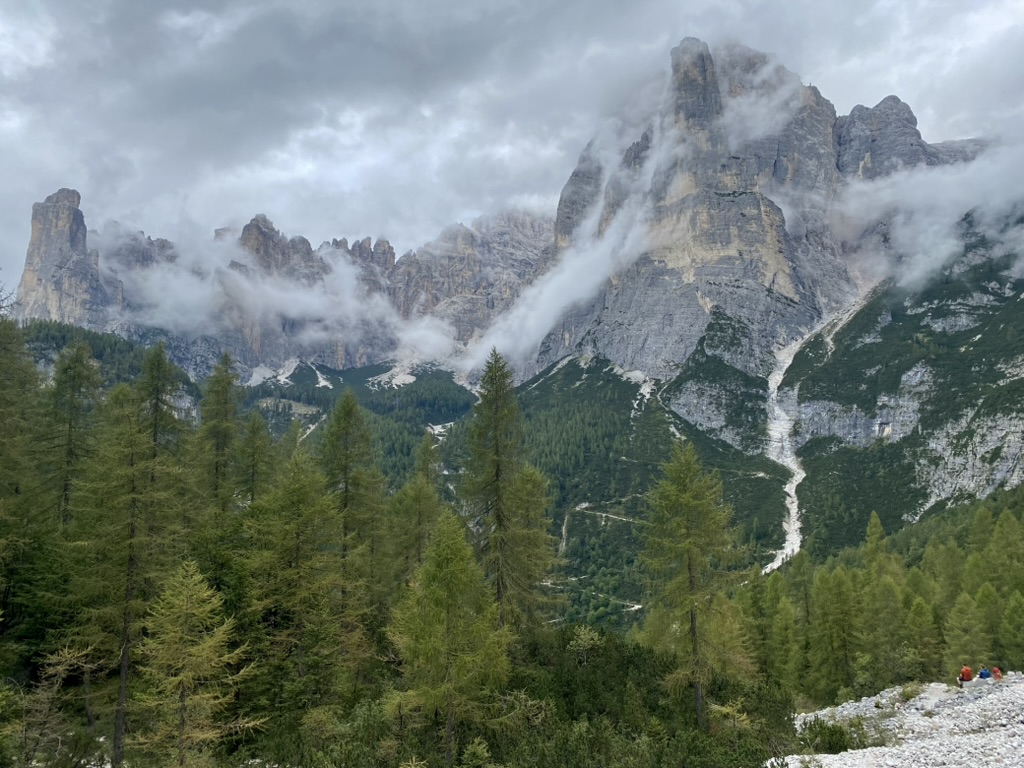
The Dolomites: Wow, wow, wow! I’ve seen many beautiful places in Europe, but the Dolomites impressed me nonetheless. All those dramatic peaks, the colours, the drops – absolutely amazing. No wonder it is a UNESCO World Heritage Site. The region can be found in northeastern Italy and it is a bit of a logistical challenge if you’re not taking a car. More on that in the Itinerary part, though. 

Alta Via 1: You can find many Alta Via’s in the Dolomites as they refer to long-distance trails traversing this beautiful region. Of all Alta Via’s, #1 is considered the most accessible as it does not require crossing any via ferratas – technical routes that require extra gear and climbing experience. That also makes it probably the most popular long-distance trek in the Dolomites, so if you are looking for solitude, another Alta Via might be a better fit.

We chose Alta Via 1 because we did not have any via ferrata experience and did not feel like carrying extra gear needed for it (e.g. harness, rope, helmet). Though it was far from solitary, we were blown away by the scenery, and I often mention Alta Via 1 as a suggestion to friends looking for a dramatic hut-to-hut hike in the Alps. 

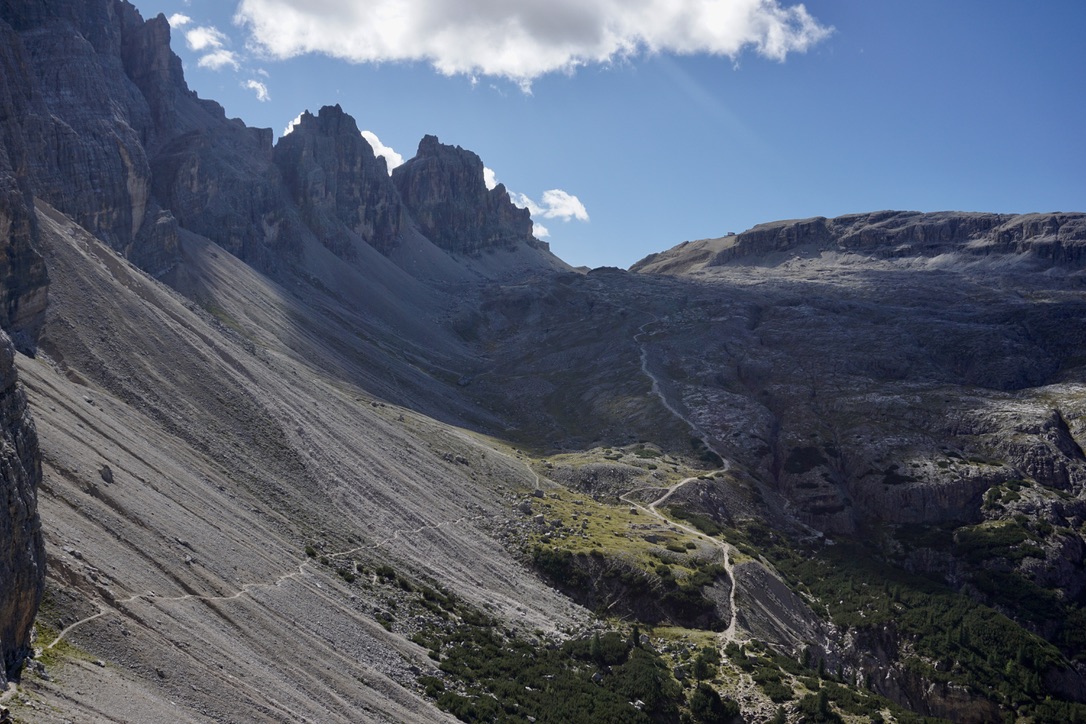
Difficulty: The Dolomites are steep! Though we never hiked for more than 25km, some of the days were really long and challenging. If you want to do this trail in 6 (or fewer) days, you should be in a good physical shape as you’ll often be crossing a few passes in one day while battling more than 1000m of elevation gain/loss. If you have more time, the trail challenges will be more spread out over the days. I’d rate this trek from moderately difficult to difficult. 

When did we hike: We did this hike in mid-September and chose this time with the purpose of avoiding the crowds. Though it was not as packed as the Tour du Mont Blanc, I was still surprised by how many people were doing this trek this late in the season. Still, I highly recommend September as a somewhat quieter time in the Dolomites. 

Itinerary

Logistics to the start: Unless you come to the region by car, the Dolomites are not easy to reach. We flew to Venice, left our small luggage there (as we needed to check in our hiking sticks), and then took a train (with a few switches) to Villabassa, which is the main village at the trailhead. It is also possible to travel from Innsbruck or Munich, though it might require more time and switches. In any case, I suggest taking a day between your flight and the regional travels to have enough time for delays and any unforeseen logistical challenges. 

The trail starts at Lago di Braies and there are regular busses going to the lake from Villabassa. It takes 20-30 minutes to travel from the village to the lake. We stayed somewhat in between, so it was even a shorter ride. 

Logistics from the finish: The trail anticlimatically finishes on a busy road near La Pissa bus stop. From there, you have an option to hitchhike, take a taxi or take a bus to Belluno, which is the nearest larger town to the trail. Together with a bunch of other hikers we waited for the bus and once it arrived… it drove by. Full, apparently. That was far from handy as the buses run not frequently at all and, apparently, also not to be counted on. Luckily (or was it really luck??.. 😉), a few minutes later, a minivan taxi showed up and we gladly took it with the whole group. 

From Belluno, there are multiple trains to most of the major cities in Italy, including Venice. Only 2 hours in a direct train and we were back to Venice where the journey started, I’d say rather a handy place for this trip.

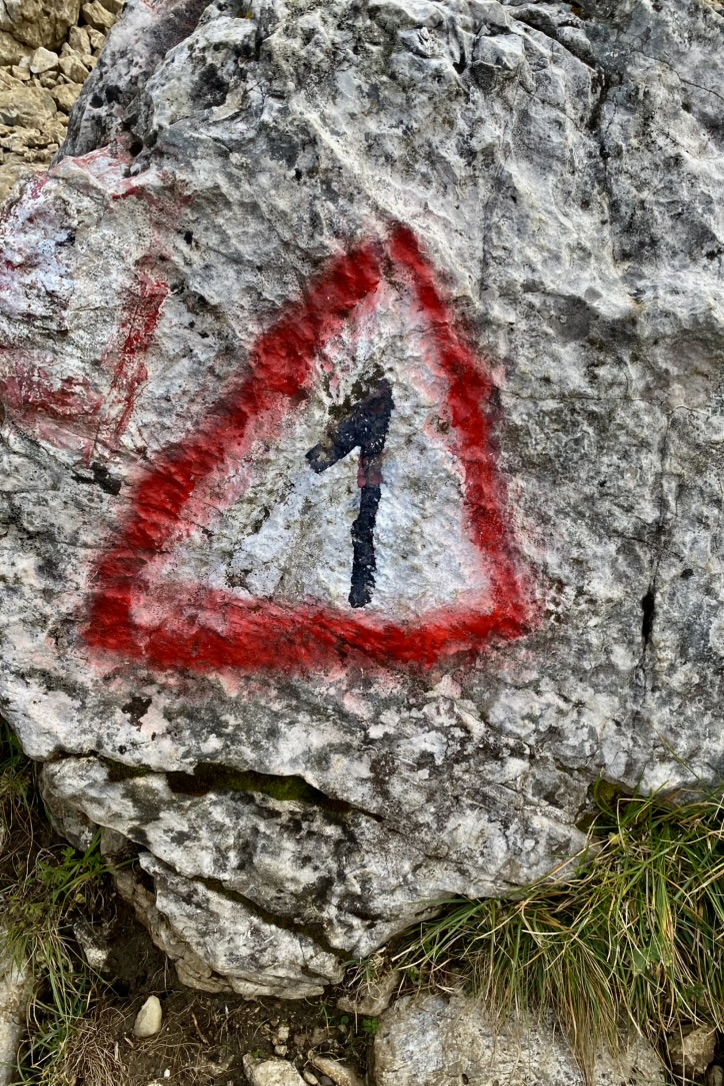
Navigation: It is a very well-established trail, and often the signs alongside the trail would specifically be marked as “Alta Via 1” or simply “1” (as in the picture above). Though in theory you should be able to hike this trek by simply following the trail signs, I highly recommend having a map of the trail as a backup. It can be either a physical or a digital map, and if it’s digital, make sure it also works offline, as you’ll often have no phone signal. I used a mix of mapy.com and maps.me as the former is visually easier to follow, while the latter allows downloading maps offline for free. 

Our 6-day itinerary

DayStartFinishDuration (only hiking)Duration (with breaks)Distance in kmElevation gain/loss in mAccommodationAccommodation price in Eur (2 people)Cash or card?
1Lago di BraiesRifugio Fanes04:3006:30201430/890Rifugio Fanes194Card
2Rifugio FanesRifugio Nuvolau05:3008:45221500/1020Rifugio Nuvolau133Card
3Rifugio NuvolauRifugio Coldai05:1508:15241030/1430Rifugio Coldai132.5Card
4Rifugio ColdaiRifugio Carestiato04:4506:3019960/1260Rifugio Carestiato119Card
5Rifugio CarestiatoRifugio Pian de Fontana05:0006:0019.51310/1510Rifugio Plan de Fontana126Cash
6Rifugio Pian de FontanaLa Pissa03:0003:3012.5300/1480Suites Hotel Astor109Card

Accommodation

Alta Via 1 is a hut-to-hut trek, and there is no way around it. It is not allowed to wild camp and there are no campsites on the way. As the trek is very popular, the earlier you can book the huts, the better. I booked this trip at around end of January, super early for my taste but hey, that allowed me to be picky in terms of dates and we even had a double room once or twice. 

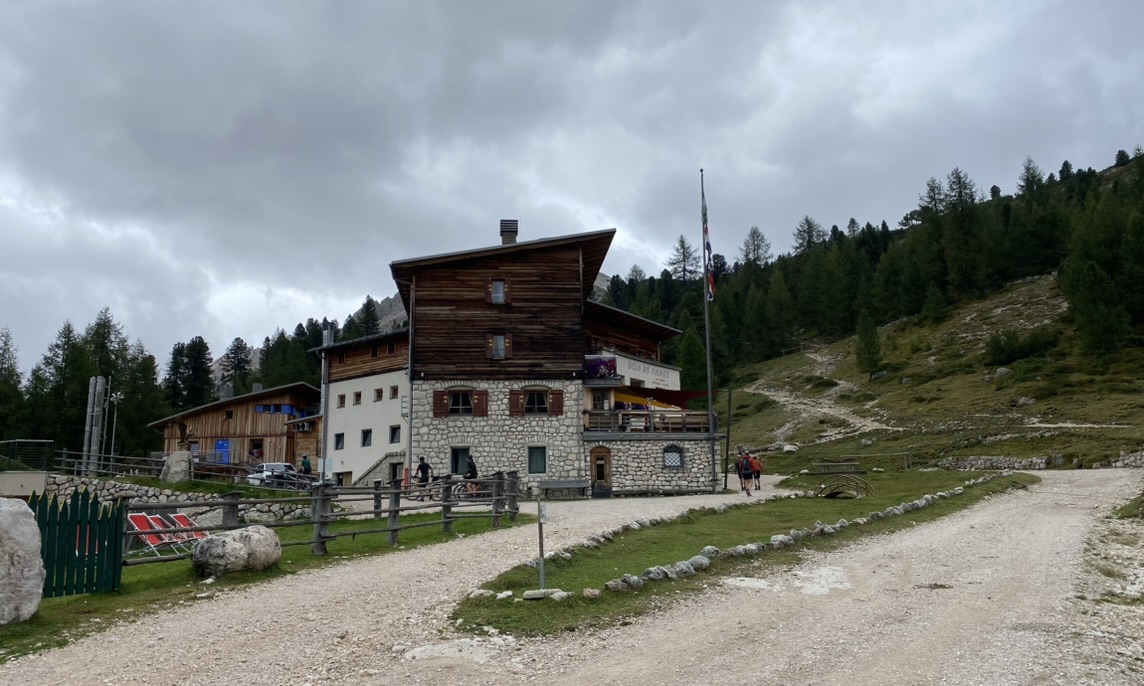
Rifugio Fanes

Once at the hut we felt more like at a hotel than a mountain hut. It is very big, modern and comes across rather fancy. We also had a double room which of course elevates the experience. The food was very good and we had a few choices for most of the courses (yes, there were a few courses).
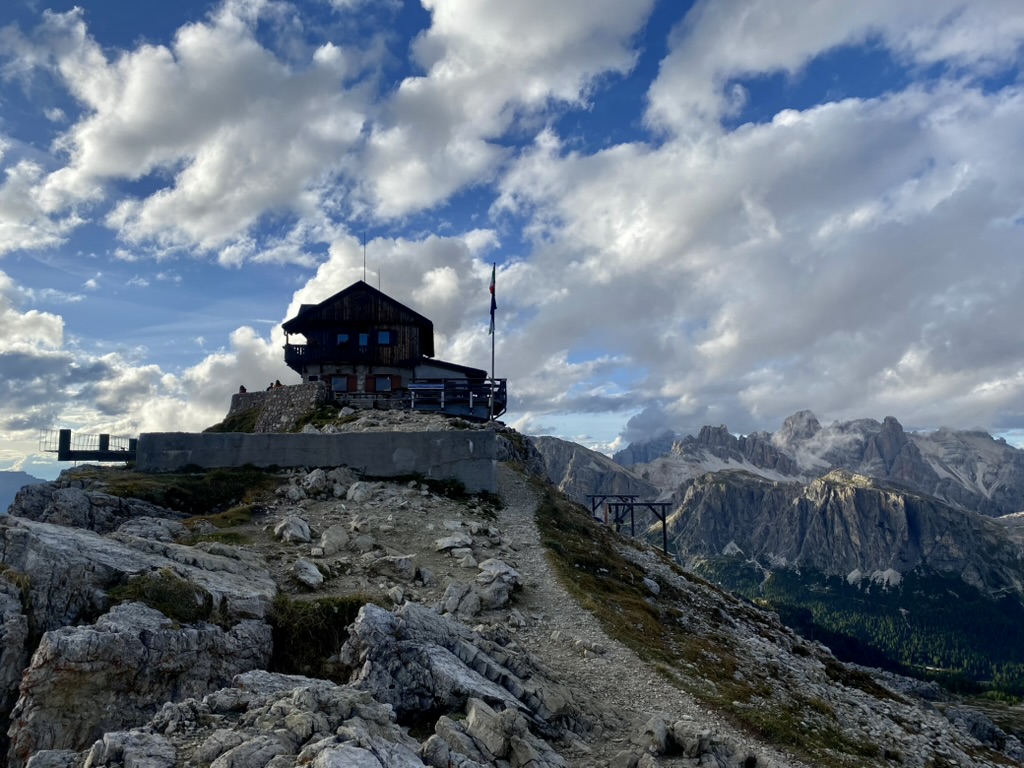
Rifugio Nuvolau

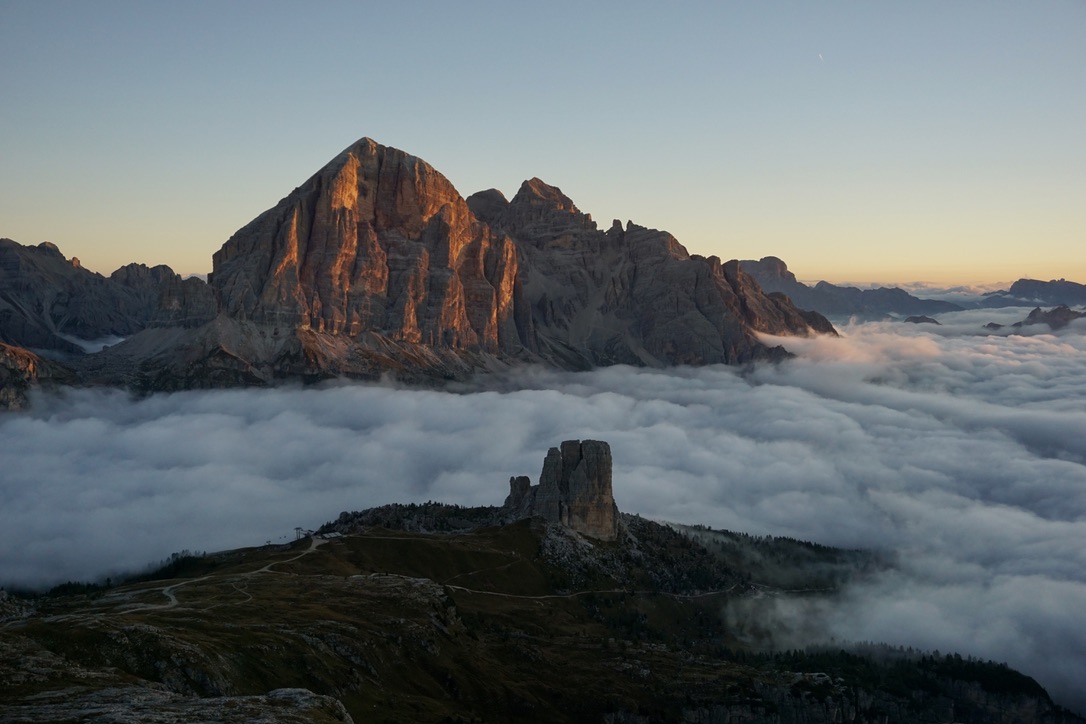
This mountain hut was in the most spectacular location of the trip. Getting there was not easy but definitely worth it. The hut itself was cozy with a couple of small rooms. We stayed in a three-person room and slept there just fine. As the location of the hut is superb, do not expect long naps in the morning as almost the whole hut is awake before the sunset to catch spectacular views. The food was fine but nothing spectacular.
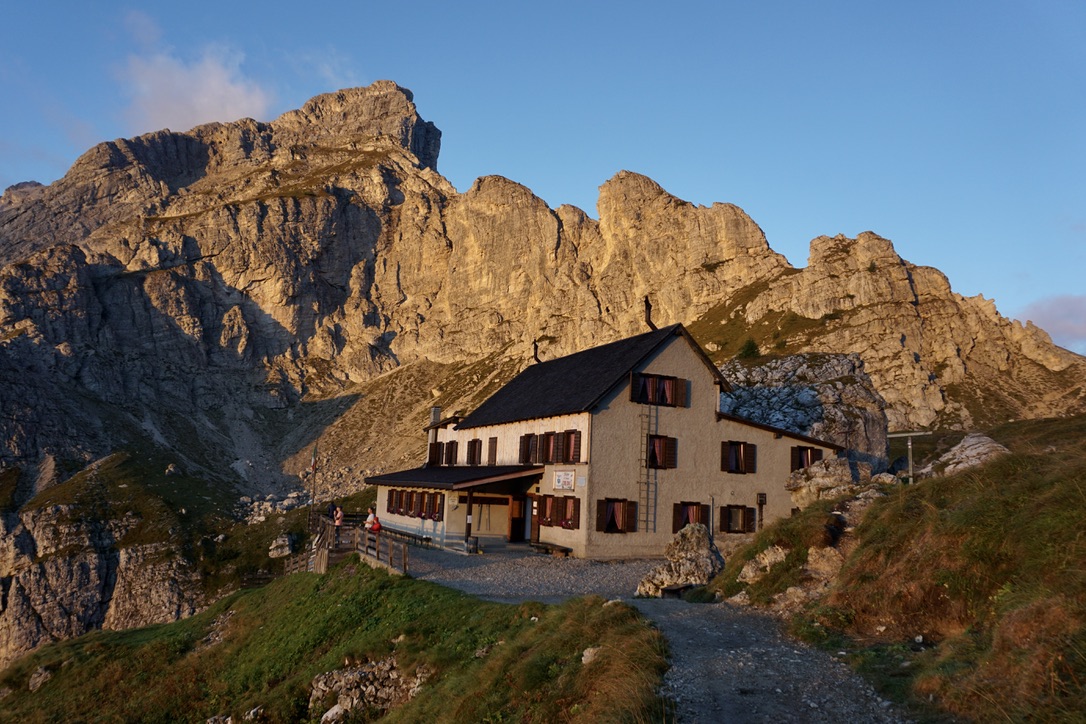
Rifugio Coldai

It took a lot of willpower to get to this hut. Not only it required a decent hike up a mountain after an already long day, we could also not see it until the final meters, I'm not kidding! The hut itself is hidden most of the climb up and if it's cloudy, then you might not be able to see it until you reached the doorstep. The hut was quite basic, many bunk beds, though the food was good and the portions were generous.
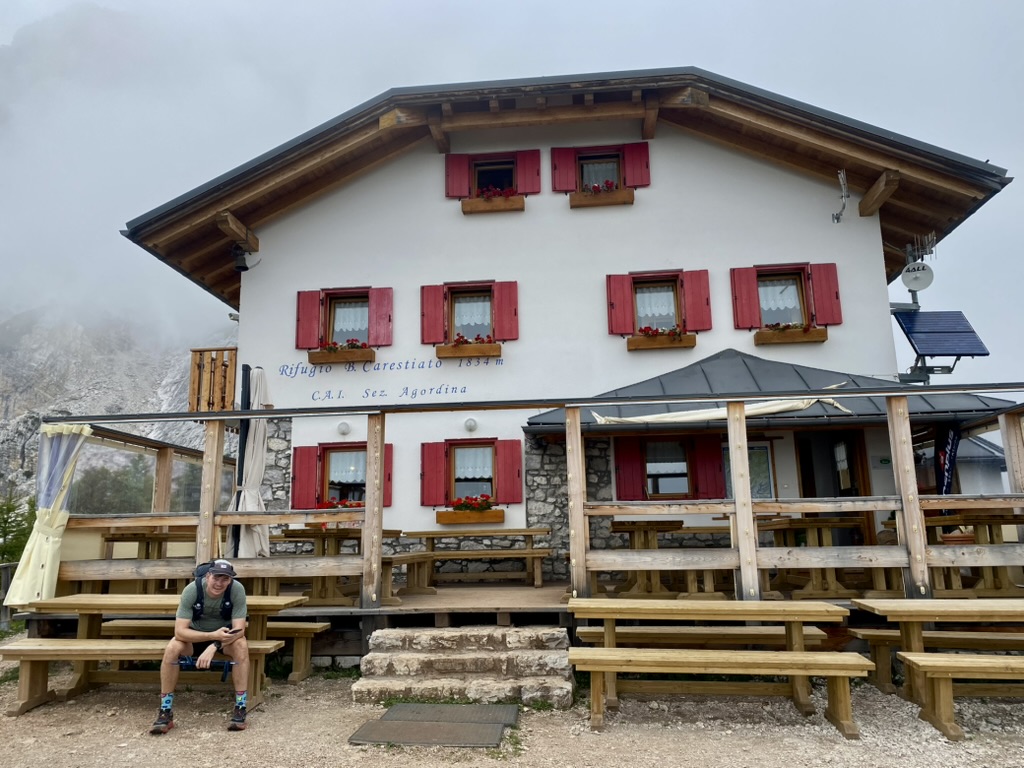
Rifugio Carestiato

This was a typical mountain hut, we stayed in a room with two other hikers and spent quite some time chilling downstairs as the day was rather short for our standards. I don't have any strong recollections, just the fact that in the morning for free you'd get some crappy coffee as part of the breakfast, while a nice tasty Italian espresso was something you had to pay extra. I get it, it's definitely more costly but it felt like a cheap upsell, something that just doesn't fit a mountain hut vibe.
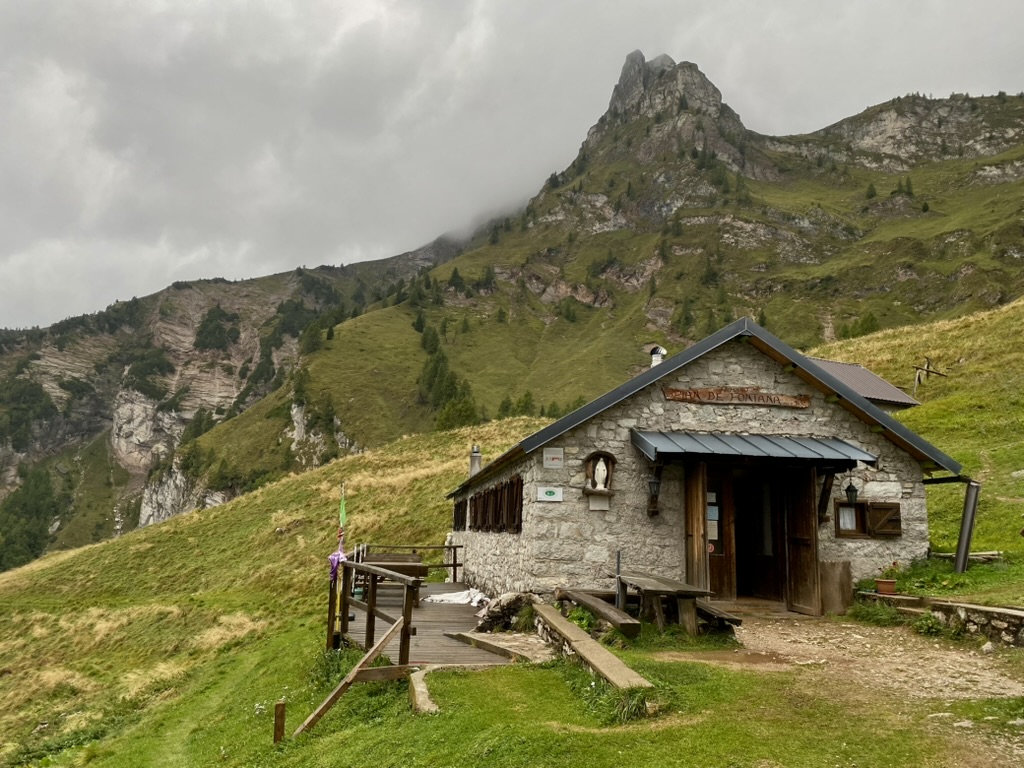
Rifugio Pian de Fontana

This mountain hut embraced and nurtured us after a very challenging day. We arrived tired and soaking wet and they absolutely took care of us with a warm soup and tea. I must mention that it was the most basic hut of the trip. We did not have warm shower (an option of a cold one was there though!) and we slept in one giant "side house" which was very basic. Regardless, we had a very homey and cozy stay with great food and lovely company. I guess I have a soft spot for simple mountain huts, there's just something charming in them!
Gear

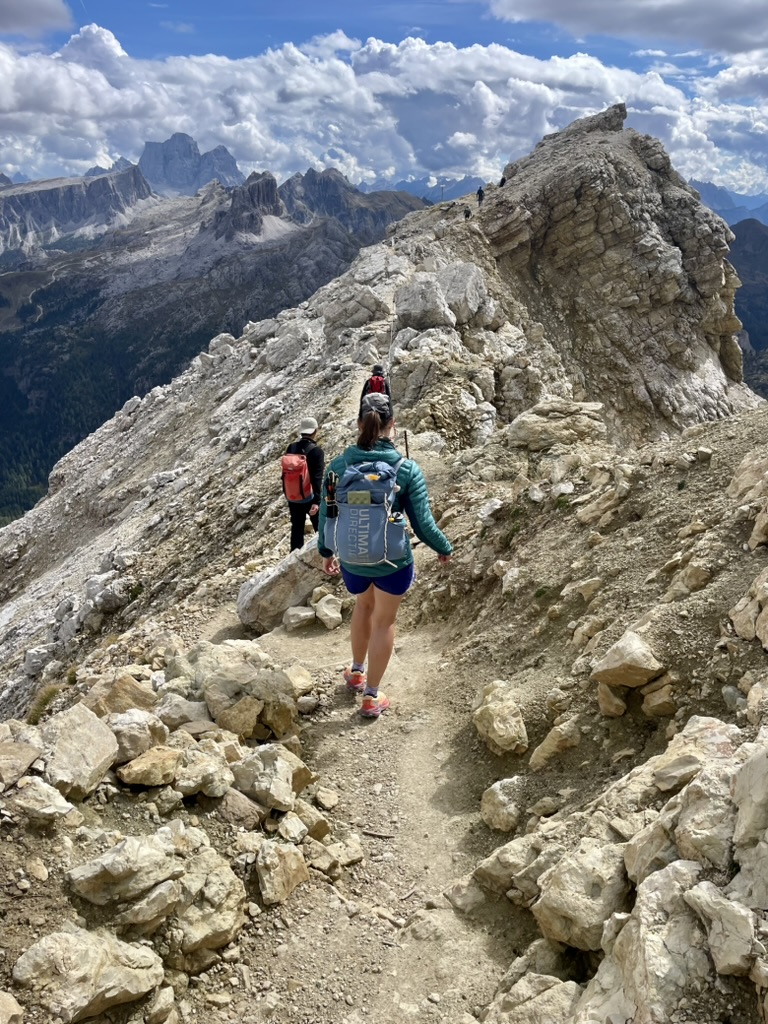
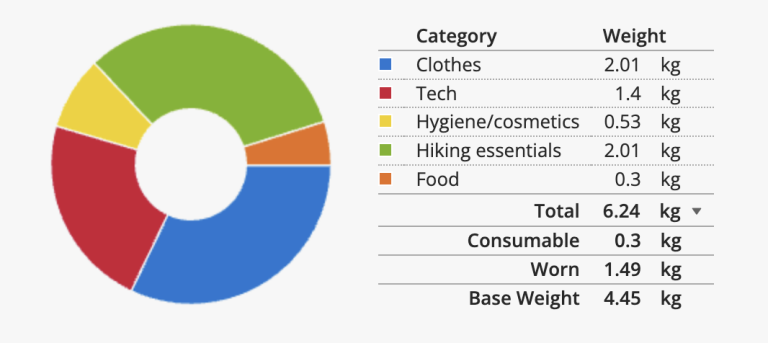
We had rather light backpacks as we stayed in mountain refuges and didn’t need camping gear. Besides, we were trying out fastpacking (combining running with hiking), and so we aimed for light backpacks. My base weight was roughly 4.5kg

You can find the full gear list on my LighterPack page, where I store my hiking gear lists from different trips. Here’s a rough summary:

3 notable items :

  1. Fastpack. Our backpacks were specifically bought for fastpacking, which means that the backpack has very minimal cushioning and a rather snug fit to not bounce back and forth when running. I chose the Ultimate Direction Fastpack 30, which held up just fine. Since it is a very minimalist backpack, having more than ~6kg may start getting uncomfortable on your shoulders since there’s no way to use your hips for carrying the weight. As the backpack is only water resistant, I also had all my stuff in a pack sack, which saved my things on the horrendous day 5.
  2. Hiking sticks. The Dolomites are steep, for real! Though we had light backpacks, we really appreciated hiking sticks. Once again, I used a gear more suitable for trail running – Leki Neotrail FX one superlite hiking sticks. I loved how light and compact they were. Each time I didn’t need them, I could just fold them and stick in my backpack. 
  3. Waterproof pants. This is a piece of gear I did not take and very much regretted on day 5. That day we got soaking wet, which on its own might not be such a big problem if not for the wind. Even though we were on the move all the time, at some point I started losing body temperature because of the bloody wind. Even though I had long pants in my backpack, those would have been soaking wet in minutes as well so I did not bother putting them on. Luckily, a fellow hiker had a spare pair of rain pants, which I could easily put over my shorts, after which I was warm and safe again. A big big lesson learnt. 

Budget

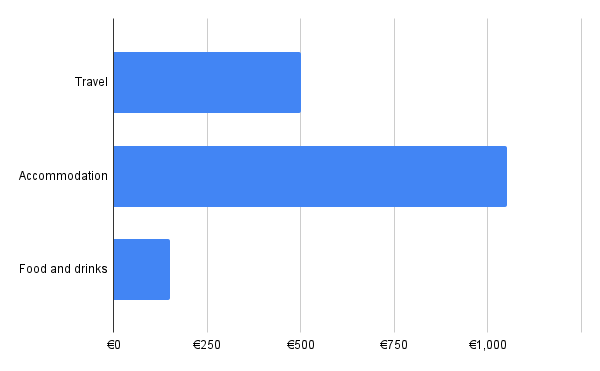
In total, for this trip (two people) we've spent roughly 1700 Eur.
As it is a hut-to-hut hike, no wonder than the majority of the costs are the huts. Mind you, we always had a half-board deal and so breakfast and dinner were included in the accommodation costs. I may have put some lunch meals in this category as well since we always paid the final bill in the evening, after all the "optional" consumptions. Also, 2 nights in Venice and one night near Braies are included in this overview.
Travel costs could be lower (or higher) depending on your starting location. I included both the flight tickets and the local public transport tickets. I'd say the flight tickets were still the major cost in this category, for local trains we paid ~ 100 Euros. I did buy Venice - Villabassa train ticket 3 months in advance which probably saved me some money.
Visuals